
On-Page SEO is one of the most important parts of ranking your website on Google. If your content is not properly optimized, search engines will struggle to understand your page, and this affects your ranking.
Whether you’re a business owner, freelancer, or content creator in the UAE, mastering On-Page SEO is essential in 2025. In this blog, you’ll learn what On-Page SEO is, why it matters, and how to optimize your content step-by-step.
🧩 What Is On-Page SEO?
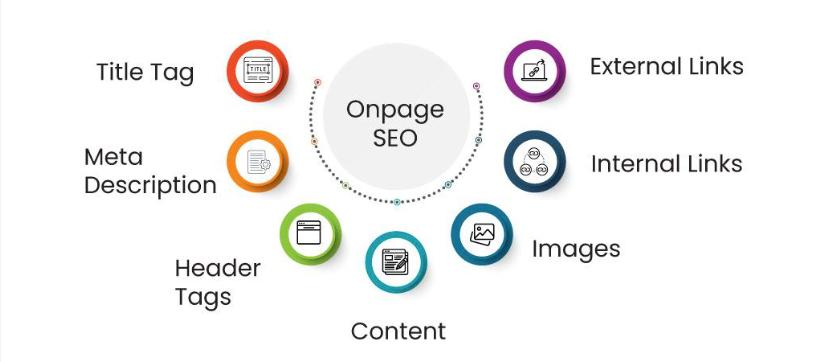
On-Page SEO refers to all the optimizations you apply within your website to help Google understand your content and rank it higher.
This includes:
- Content quality
- Keywords and placement
- Meta tags
- URL structure
- Internal linking
- Image optimization
- Header structure
- User experience
If On-Page SEO is done correctly, you can rank faster—even with low backlinks.
⭐ Why On-Page SEO Matters in 2025
Google’s algorithm is becoming smarter every year. It now ranks content based on:
- Relevance
- User experience
- Search intent
- Content depth
On-Page SEO ensures your content matches what Google wants.
Benefits of strong On-Page SEO:
- Higher visibility
- Increased organic traffic
- Better user engagement
- More leads for your business
- Stronger authority in your niche
Especially in the UAE, where competition is high, On-Page SEO helps small businesses outrank big brands.
🔍 Key Components of On-Page SEO
Let’s break down what you need to optimize:
1. High-Quality Content
Content is king — but quality is the real king.
Your content must be:
- Unique
- Helpful
- Well-structured
- Keyword-optimized
- Easy to read
Google rewards content that answers user questions better than competitors.
2. Focus Keyphrase Optimization
Place your main keyword in:
- Title
- Meta description
- H1 heading
- Within first 100 words
- Subheadings (if natural)
- URL slug
- Image alt text
Do not overuse the keyword.
3. Proper Heading Structure (H1, H2, H3)
Headings help Google understand:
- What your blog is about
- How the content is organized
Example:
- H1: Main topic
- H2: Subtopics
- H3: Points under subtopics
This improves readability and SEO.
4. Meta Title & Meta Description
This is what users see on Google.
Good meta titles:
- Include the main keyword
- Are 50–60 characters
- Are compelling
Good meta descriptions:
- Summarize the blog
- Include the main keyword
- Are 140–160 characters
Meta tags affect both ranking and click-through rate.
5. URL Structure
URLs should be:
- Short
- Clean
- Keyword-rich
Example:
❌ website.com/12345?p=seo
✔ website.com/on-page-seo-guide
6. Internal Linking
Internal links:
- Improve navigation
- Help Google crawl your site
- Boost rankings for other pages
- Keep visitors on your site longer
Example: Link to related blogs like keyword research or types of SEO.
7. Image Optimization
Optimize images by:
- Compressing files
- Adding descriptive alt text
- Using keyword variations
- Naming images properly
Example: on-page-seo-optimization.jpg
8. User Experience (UX)
Google ranks pages that offer a positive user experience.
UX factors include:
- Fast loading time
- Easy navigation
- Clear layout
- Mobile responsiveness
A smooth website = better rankings.
🏁 Conclusion
On-Page SEO is the foundation of every successful SEO strategy. Without proper optimization, even strong content will struggle to rank. By focusing on headings, meta tags, internal links, content quality, and keyword placement, you can significantly improve your website’s visibility on Google.
For UAE businesses and freelancers, mastering On-Page SEO in 2025 is the fastest way to grow online and attract high-quality customers.