
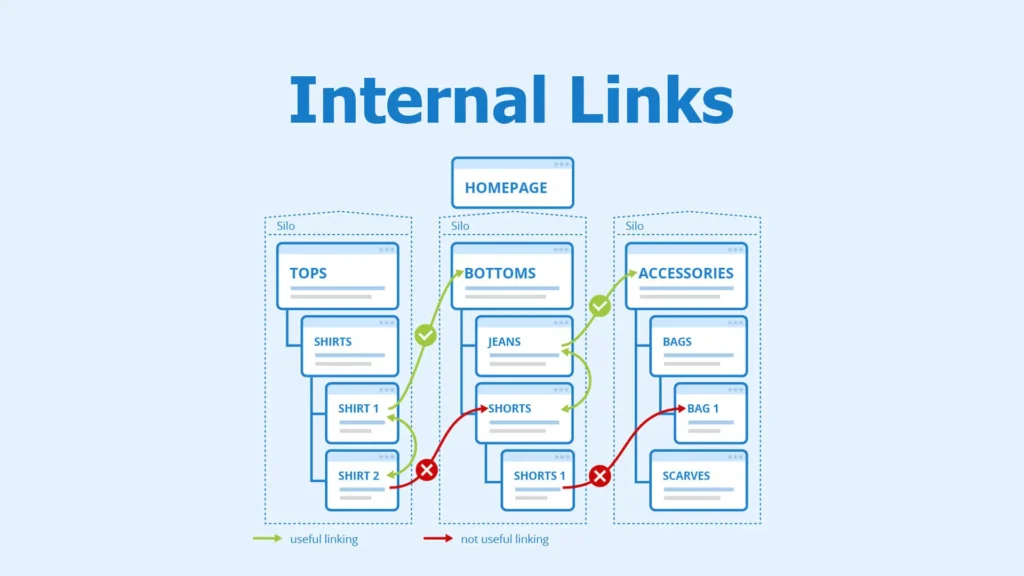
Internal linking is one of the most powerful — and most overlooked — SEO techniques. When used correctly, internal links can boost your Google rankings, improve user experience, and help search engines understand your website better.
Many UAE businesses ignore internal linking, focusing only on keywords and backlinks. But Google heavily relies on internal links to crawl, index, and rank content.
This guide explains how internal linking works and how to use it to improve your SEO in 2025.
🔗 What Is Internal Linking?
Internal links are links that connect one page of your website to another.
Example: A blog about SEO keywords linking to a blog about On-Page SEO.
These links help:
- Guide users
- Help search engines understand site structure
- Distribute page authority (link juice)
- Increase ranking potential
⭐ Why Internal Linking Is Important
Internal linking helps both search engines and website visitors.
✔ 1. Improves Google Crawling
Google bots use internal links to discover new pages.
If your page is not linked from anywhere, Google may not find it.
✔ 2. Boosts Page Authority
Authority (link juice) flows from strong pages to weaker ones.
Example: Linking from your homepage to a new blog increases its ranking potential.
✔ 3. Enhances User Experience
Internal links help users:
- Read related content
- Stay longer on your website
- Understand your services better
Longer session = better SEO.
✔ 4. Helps Build Topic Clusters
Google rewards websites that create strong topical relevance.
Example topic cluster:
- SEO Basics
- Keyword Research
- On-Page SEO
- Internal Linking
- Technical SEO
Each blog links to the others → stronger ranking.
🛠 Types of Internal Links
1. Navigational Links
Menus, footers, sidebar links.
2. Contextual Links (Most Important)
Links placed inside blog content.
Example: “Read our guide on long-tail keywords.”
3. In-Content Call-to-Action Links
Examples:
- “Book a free consultation”
- “View our services”
4. Image Links
Clickable images linking to relevant pages.
📘 How to Use Internal Linking (Best Practices for 2025)
✅ 1. Link from High-Authority Pages to New Pages
Your strongest pages:
- Homepage
- Popular blogs
- Service pages
should link to:
- New blogs
- New product pages
- Important landing pages
This boosts ranking quickly.
✅ 2. Use Descriptive Anchor Text
Anchor text = words that contain the hyperlink.
Example:
✔ “Read our SEO beginner guide”
❌ “Click here”
Google understands your page better when anchor text is descriptive.
✅ 3. Link to Relevant Pages Only
Do not link randomly.
Keep it topical, logical, and valuable.
✅ 4. Use 3–5 Internal Links per Blog
For a 500–700 word blog, 3 internal links are ideal.
For long blogs (1500+ words), 5–8 links work best.
✅ 5. Create Pillar Pages & Topic Clusters
Pillar page example:
“Complete SEO Guide for UAE Businesses (2025)”
This page links to:
- On-Page SEO
- Keyword Research
- Technical SEO
- Internal Linking
- Local SEO UAE
And each blog links back to the pillar.
✅ 6. Add Internal Links Near the Top
Google crawlers read pages from top to bottom.
Early links help faster discovery.
✅ 7. Fix Broken Internal Links
Broken links hurt:
- User experience
- Crawlability
- SEO rankings
Check and update regularly.
🏁 Conclusion
Internal linking is a simple but powerful SEO strategy. When done right, it improves Google crawling, boosts page authority, and helps you rank higher — especially in a competitive market like the UAE.
Start adding smart internal links to every blog and page. Over time, your website will become more organized, more powerful, and more visible on Google.