
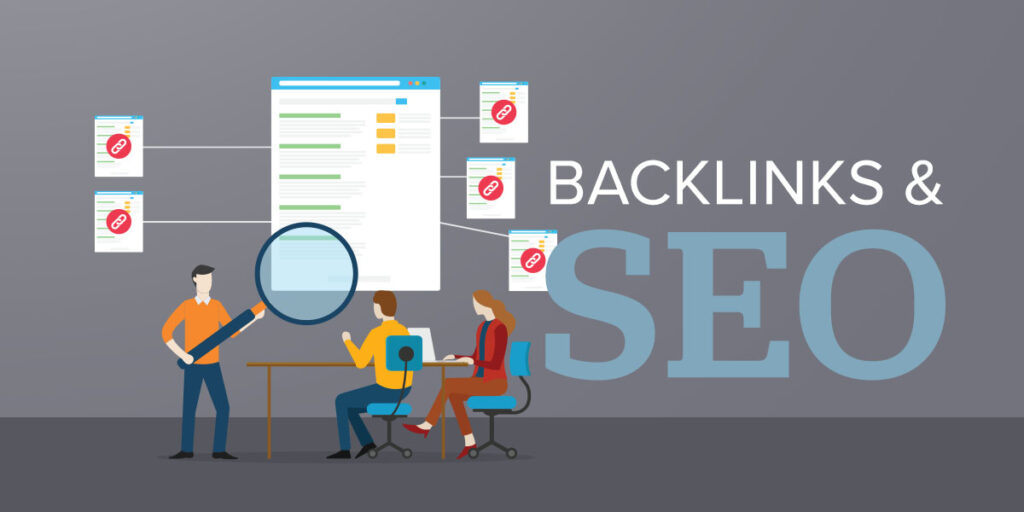
Backlinks are one of the strongest ranking factors in SEO. Even if your website has excellent content, it will struggle to rank without backlinks. Google treats backlinks as votes of confidence — when other websites link to your content, Google understands that your website is trustworthy and valuable.
In this blog, you’ll learn what backlinks are, why they matter, and how to build high-quality backlinks the right way.
🔗 What Are Backlinks?
A backlink is a link from one website to another.
Example:
If a blog links to your website article, that link is a backlink.
Google uses backlinks to measure:
- Website authority
- Trustworthiness
- Relevance
More high-quality backlinks = better chances of ranking higher on Google.
⭐ Why Backlinks Are Important for SEO
Backlinks help SEO in many ways:
✔ Improve Google rankings
✔ Increase website authority
✔ Bring referral traffic
✔ Build brand credibility
✔ Help pages get indexed faster
Google values quality backlinks, not spammy ones.
🧠 Types of Backlinks
✅ 1. DoFollow Backlinks
These pass SEO value (link juice) and help improve rankings.
✅ 2. NoFollow Backlinks
These don’t pass direct SEO value but still help with traffic and brand visibility.
✅ 3. Natural Backlinks
Earned organically when people link to your content.
✅ 4. Manual Backlinks
Created through outreach, guest posting, or listings.
✅ 5. Editorial Backlinks
Links placed naturally within high-quality content — the most valuable type.
🚫 Bad Backlinks to Avoid
❌ Spammy directories
❌ Paid link farms
❌ Irrelevant websites
❌ Automated link building
❌ Comment spam
Low-quality backlinks can lead to Google penalties.
🛠 How to Get High-Quality Backlinks (Step-by-Step)
✅ 1. Create High-Quality Content
The best backlinks come from valuable content such as:
- In-depth guides
- Case studies
- Original research
- Tutorials
Content that solves problems naturally attracts links.
✅ 2. Guest Posting
Write articles for:
- Industry blogs
- Business websites
- Niche publications
Include a natural link back to your website.
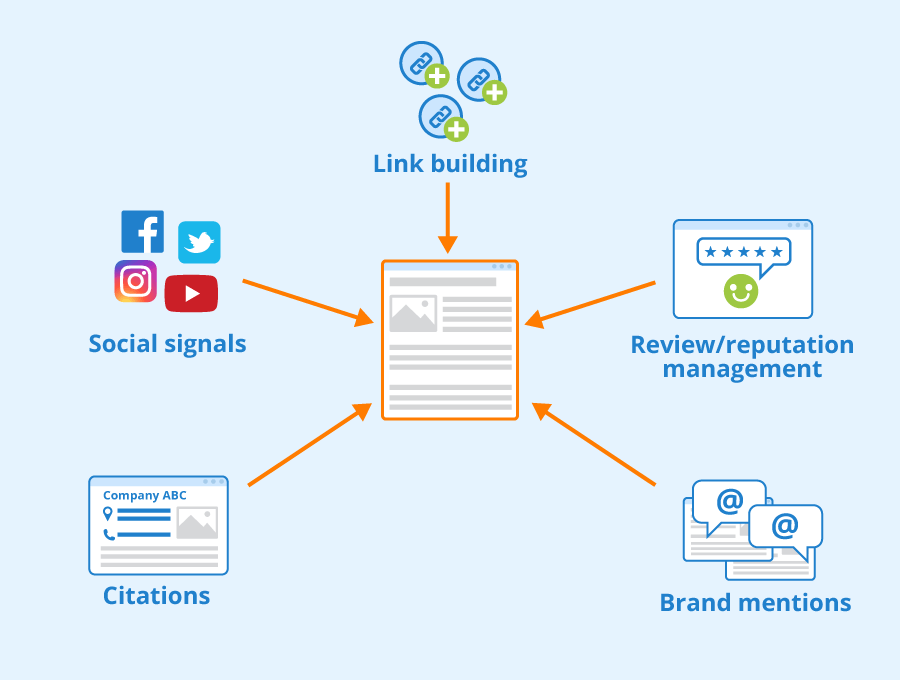
✅ 3. Business Listings & Citations
List your website on:
- Google Business Profile
- Local directories
- Industry-specific directories
These links help local SEO and trust.
✅ 4. Broken Link Building
Find broken links on other websites and suggest your content as a replacement.
This is a white-hat and effective strategy.
✅ 5. Outreach to Bloggers & Influencers
Reach out to:
- Bloggers
- Influencers
- Content creators
Offer value before asking for a link.
✅ 6. Content Promotion
Share your content on:
- Social media
- Email newsletters
More visibility = more chances of backlinks.
✅ 7. Internal Linking Support
Strong internal linking improves how backlinks pass authority across your site.
📈 How Many Backlinks Do You Need?
There’s no fixed number.
It depends on:
- Competition
- Keyword difficulty
- Industry
Focus on:
✔ Quality over quantity
✔ Relevant websites
✔ Natural growth
🏁 Conclusion
Backlinks are the foundation of Off-Page SEO. High-quality backlinks build authority, trust, and long-term rankings. Instead of chasing hundreds of links, focus on earning links from relevant, authoritative websites.
When combined with strong content and technical SEO, backlinks can push your website to the top of Google.
Build links the right way — and rankings will follow.