
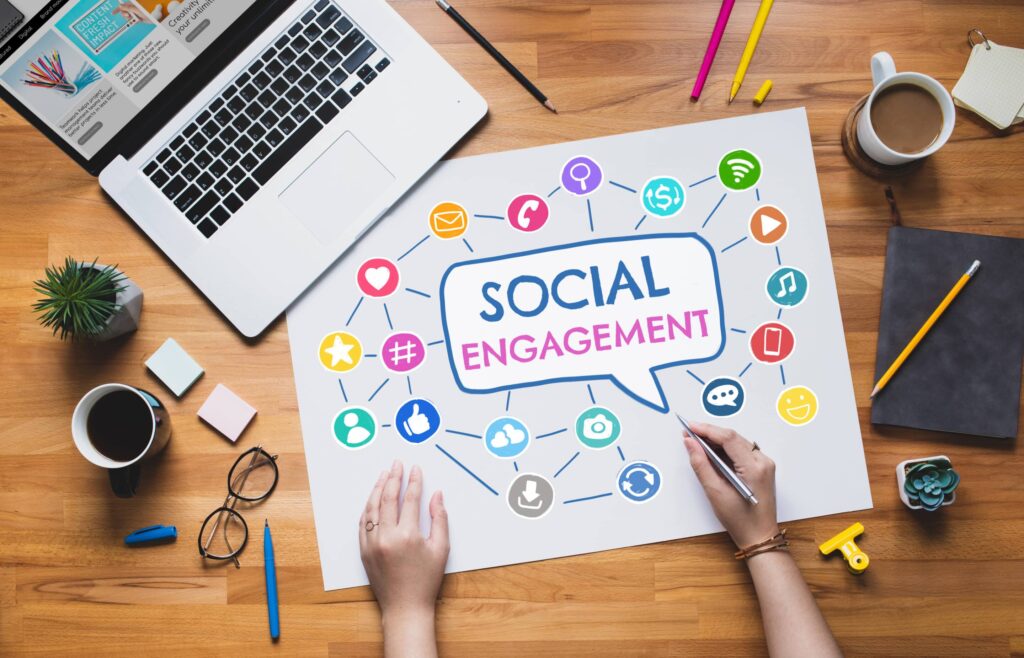
One of the most common questions in digital marketing is:
👉 Do social media likes, shares, and comments help SEO?
Some say yes.
Some say no.
The truth lies in between.
Social signals may not be a direct Google ranking factor, but they play a strong indirect role in SEO success. In this blog, we’ll break down what social signals are, how they support SEO, and why they still matter for businesses.
🔍 What Are Social Signals?
Social signals refer to interactions on social media platforms such as:
- Likes
- Shares
- Comments
- Saves
- Mentions
- Profile visits
Platforms include:
- X (Twitter)
These signals show how people engage with your content.
❓ Do Social Signals Directly Affect Google Rankings?
Google has clearly stated that:
Social media signals are not direct ranking factors.
That means:
❌ Likes alone won’t push your website to page one
❌ Shares don’t automatically increase rankings
But that doesn’t mean social media has no impact on SEO.
⭐ How Social Signals Indirectly Help SEO
✅ 1. Increase Content Visibility
When your content is shared on social media:
- More people see it
- More people visit your website
- More chances of earning backlinks
Visibility leads to opportunity — and backlinks are a major ranking factor.
✅ 2. Support Backlink Building
Strong social presence helps:
- Bloggers discover your content
- Journalists find your articles
- Website owners reference your work
Many backlinks start with social exposure.
✅ 3. Build Brand Awareness & Trust
Google values brands.
When people:
- Search your brand name
- Mention your business online
- Engage with your content
It sends trust signals across the web.
Brand trust = stronger SEO foundation.
✅ 4. Drive High-Quality Traffic
Traffic from social media can:
- Increase time on site
- Reduce bounce rate
- Improve engagement
These user behavior signals help Google understand that your content is valuable.
✅ 5. Improve Indexing Speed
When new content is shared widely:
- Google crawls it faster
- Pages get indexed quicker
This is especially useful for new websites and blogs.
🧠 Social Media vs SEO: How They Work Together
| SEO | Social Media |
|---|---|
| Long-term growth | Instant visibility |
| Search intent driven | Interest & discovery |
| Keyword focused | Engagement focused |
| Google rankings | Audience building |
SEO and social media are not competitors — they are support systems.
📈 Best Practices to Use Social Media for SEO
✔ Share every new blog post
✔ Use consistent branding
✔ Write meaningful captions
✔ Encourage discussion
✔ Be active, not automated
✔ Focus on value, not promotion
✔ Build a recognizable personal or business brand
Avoid posting links without context.
🚫 Social Media Mistakes That Don’t Help SEO
❌ Buying fake likes or followers
❌ Posting without strategy
❌ Ignoring engagement
❌ Sharing low-quality content
❌ Inconsistent branding
These actions add noise, not value.
🌍 Why This Matters for Businesses
For freelancers and businesses:
- Social media builds visibility
- SEO builds discoverability
If people see your brand often and then search for you on Google, that combination strengthens trust and authority.
That’s how modern SEO works.
🏁 Conclusion
Social signals may not directly rank your website, but they strongly support everything that does. They increase visibility, attract backlinks, build brand authority, and drive engaged traffic — all of which help SEO in the long run.
Think of social media as the amplifier and SEO as the foundation.
When both work together, growth becomes sustainable.